
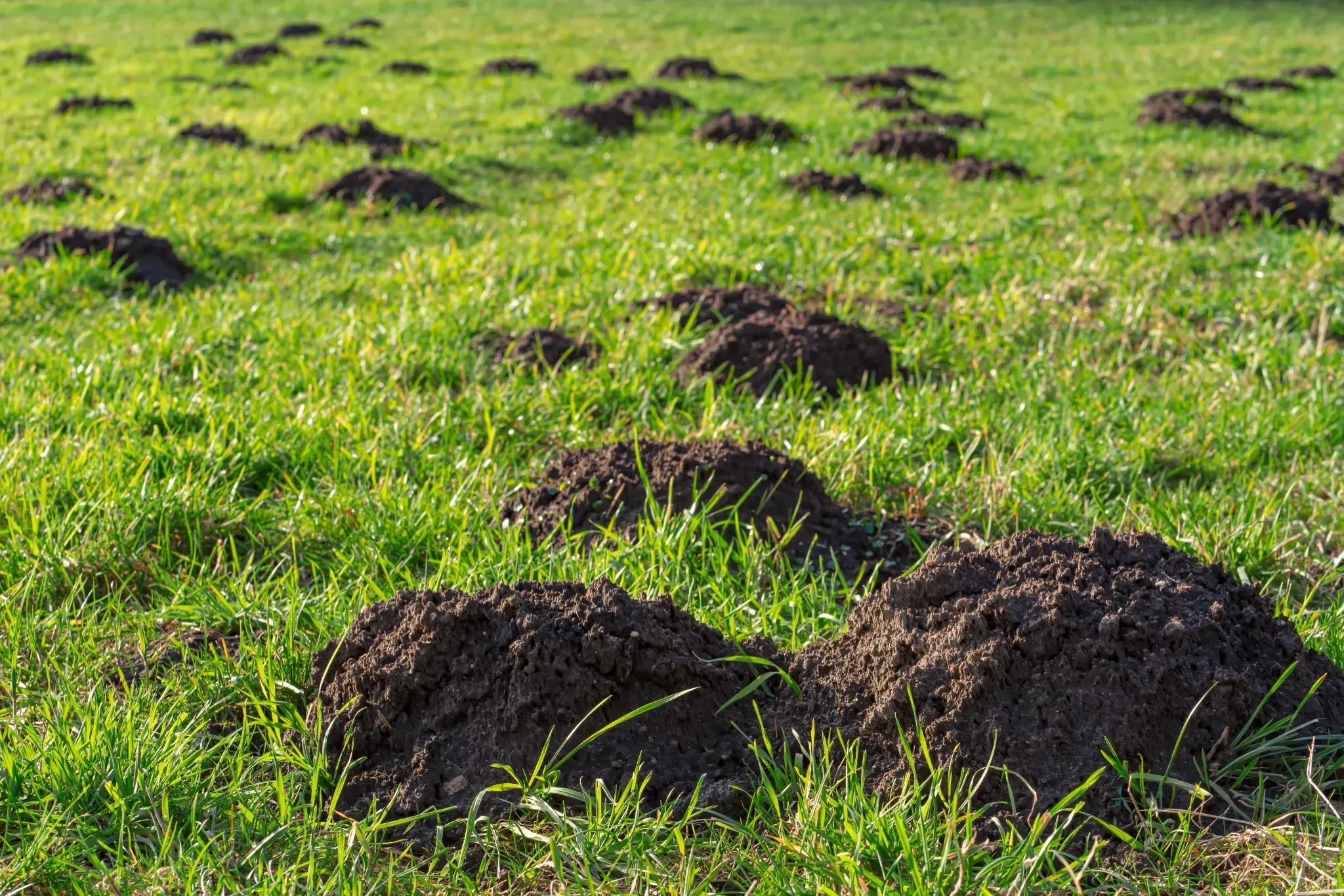
Mole activity can leave your lawn looking uneven, patchy, and unsightly. Our lawn repair service not only restores your yard’s beauty but also addresses the underlying issues that attract moles back. For a full overview of our approach, visit our Mole Removal Services page.
Identifying the Damage
Moles create a variety of problems across your property. Common signs of damage include:
- Unsightly Molehills: Mounds of displaced soil that interrupt the natural contour of your lawn and make mowing a challenge.
- Surface Tunnels: Raised ridges that disrupt mowing patterns and create a patchy, uneven appearance.
- Compromised Soil Structure: Tunneling weakens the soil, affecting grass root stability and overall lawn health.
If you’d like to understand why professional removal is more effective than DIY approaches, see our Why Professional Mole Removal Works Better post.
Our Lawn Repair Process
We follow a detailed, multi-step process to repair and rejuvenate mole-damaged lawns.
1. Thorough Damage Assessment
Our team begins by inspecting your property to map all tunnel systems — from deep permanent tunnels to surface irregularities — and evaluate soil compaction and nutrient deficiencies so we can tailor the repair strategy.
2. Tunnel Filling and Surface Leveling
We tamp down all tunnels and molehills to restore an even, stable surface. This step prevents ongoing settling and prepares the area for re-seeding.
3. Re-Seeding and Lawn Renovation
The final step is to rejuvenate the turf with high-quality grass seed varieties suited to the East Tennessee climate and resilient against future soil disturbance. For additional context on mole habits and prevention strategies, see our Understanding Mole Behavior post.
Ready to Repair Your Lawn?
Don’t let mole damage linger — the longer tunnels go unfilled, the more settling and root damage occurs. Contact Wills Wildlife Control to schedule a consultation and restore your yard to its natural beauty.