
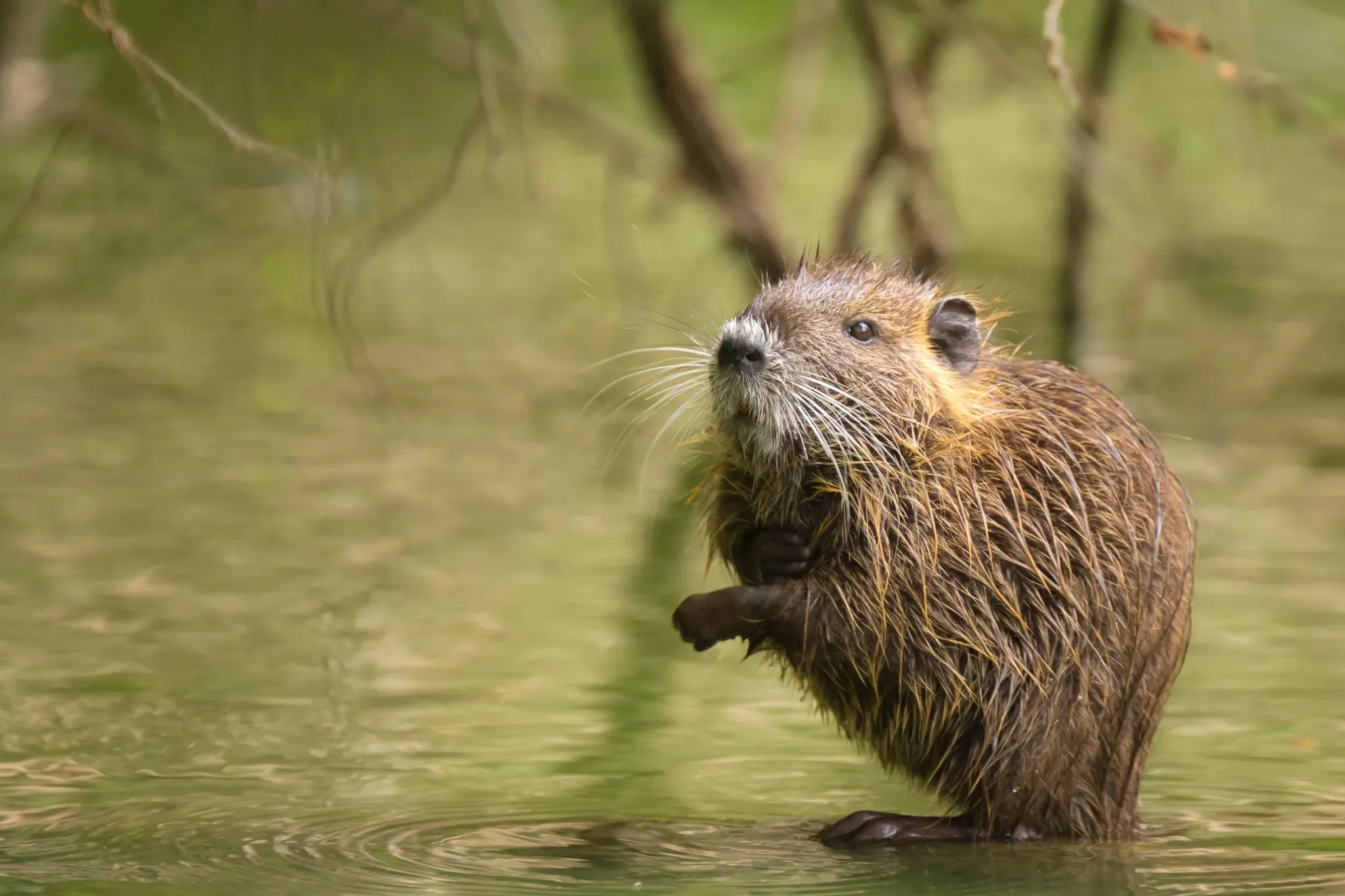
Professional Muskrat Removal Services
You might not see them. But they’re already working.
Muskrats burrow below the waterline where the damage is invisible until it’s serious. By the time the surface shows a problem, the tunnels underneath have often been there for months.
Muskrat removal is a specialized service that most wildlife control companies in East Tennessee simply don’t offer. We do.
Wills Wildlife Control has the equipment, the TWRA licensing, and the waterside experience to handle muskrat activity on ponds, lakes, stream banks, and earthen dam walls. If you’ve been told no one can help, call us.
Signs You Have a Muskrat Problem
- Bank Burrow Entrances: Muskrat burrow openings are typically 4 to 6 inches in diameter and are found just at or below the waterline along pond banks, stream edges, and earthen berms. They’re often hidden by overhanging vegetation and easy to miss during a casual walkthrough.
- Lodge Structures: In addition to bank burrows, muskrats sometimes build dome-shaped lodges from aquatic vegetation, similar in appearance to a small, rough pile of cattails or reeds, rising a foot or two above the water surface.
- Vegetation Damage: Muskrats feed heavily on aquatic plants, cattails, water lilies, and emergent vegetation. Significant reduction in pond-edge vegetation, especially in feeding platforms, flat mats of chewed plant material at the water’s edge, is a reliable sign.
- Muddy or Eroding Banks: Burrow activity weakens the soil structure of pond banks. Look for sections of bank that appear collapsed, slumped, or unusually soft and muddy near the waterline.
- Visual Sightings: Muskrats are most active at dawn and dusk. They’re roughly the size of a large rat with a long, flattened tail and are often seen swimming close to the bank or sitting on feeding platforms near the water’s edge.
Our Muskrat Removal Process
Muskrat removal requires waterside trapping experience and the right equipment, standard cage traps set back from the water rarely work. Our process is built around how muskrats actually use the water and the bank, which is why we get results where general pest control companies fall short or decline to take the job entirely.
- Free Inspection: We walk the perimeter of the affected water feature to locate active burrow entrances, feeding platforms, and lodge structures, and assess the extent of any bank damage already caused.
- Targeted Waterside Trapping: We deploy specialized traps at active burrow entrances and along muskrat travel routes at the water’s edge, the locations where muskrats actually move, not just where they’re visible. Traps are monitored regularly until the population is cleared.
- Bank Damage Assessment: After removal, we assess the extent of burrowing and advise on any bank reinforcement or repair that may be needed to restore structural integrity and prevent collapse.
- Habitat & Attractant Guidance: We identify vegetation and bank conditions that are attracting muskrats and provide practical recommendations for reducing the appeal of the site to future animals.
- Prevention Warranty: Our work is backed by a warranty so you can have lasting peace of mind.
Dangers of Muskrats on Your Property
Because muskrat burrows enter below the waterline, most property owners don’t realize how serious the problem is until something fails above ground.
A single muskrat can dig a burrow extending 15 feet or more into a pond bank. A pair becomes a colony fast. The resulting network of tunnels erodes the bank from the inside out, and the outcome can be dramatic: a pond bank collapses, a berm fails, a section of earthen dam gives way.
The repair costs from a full bank failure far exceed the cost of early removal. Muskrats also damage irrigation infrastructure, decorative water features, and managed wetlands. Seeing the first burrowing activity is the right time to act, not after the structure gives way.
Why Choose Wills Wildlife Control?
- One of the Few Companies That Actually Does This: Most wildlife control operators in the Knoxville area don’t handle muskrats. We do, with the proper equipment, waterside trapping experience, and TWRA licensing to do it legally and effectively.
- Licensed & Insured: Fully certified by the Tennessee Wildlife Resources Agency (TWRA), so every removal is legal, documented, and done right.
- Local Experts, Not a Franchise: We’re Knoxville-based with over 30 years of combined experience. We know local waterways, local wildlife behavior, and local regulations.
- Fast Response: Most jobs are scheduled same-day or next-day, and with muskrats, speed matters, because each day of burrowing means more bank damage.
- 5-Star Rated: 102+ verified Google reviews with a perfect 5.0 score from homeowners across East Tennessee.